


While the 90s gave us some questionable fashion choices, Cartier managed to strike gold in 1996 with the Française. It wasn’t just a new watch; it was the Tank that decided it wanted to be a bracelet first and a timepiece second.
Armour for the Wrist
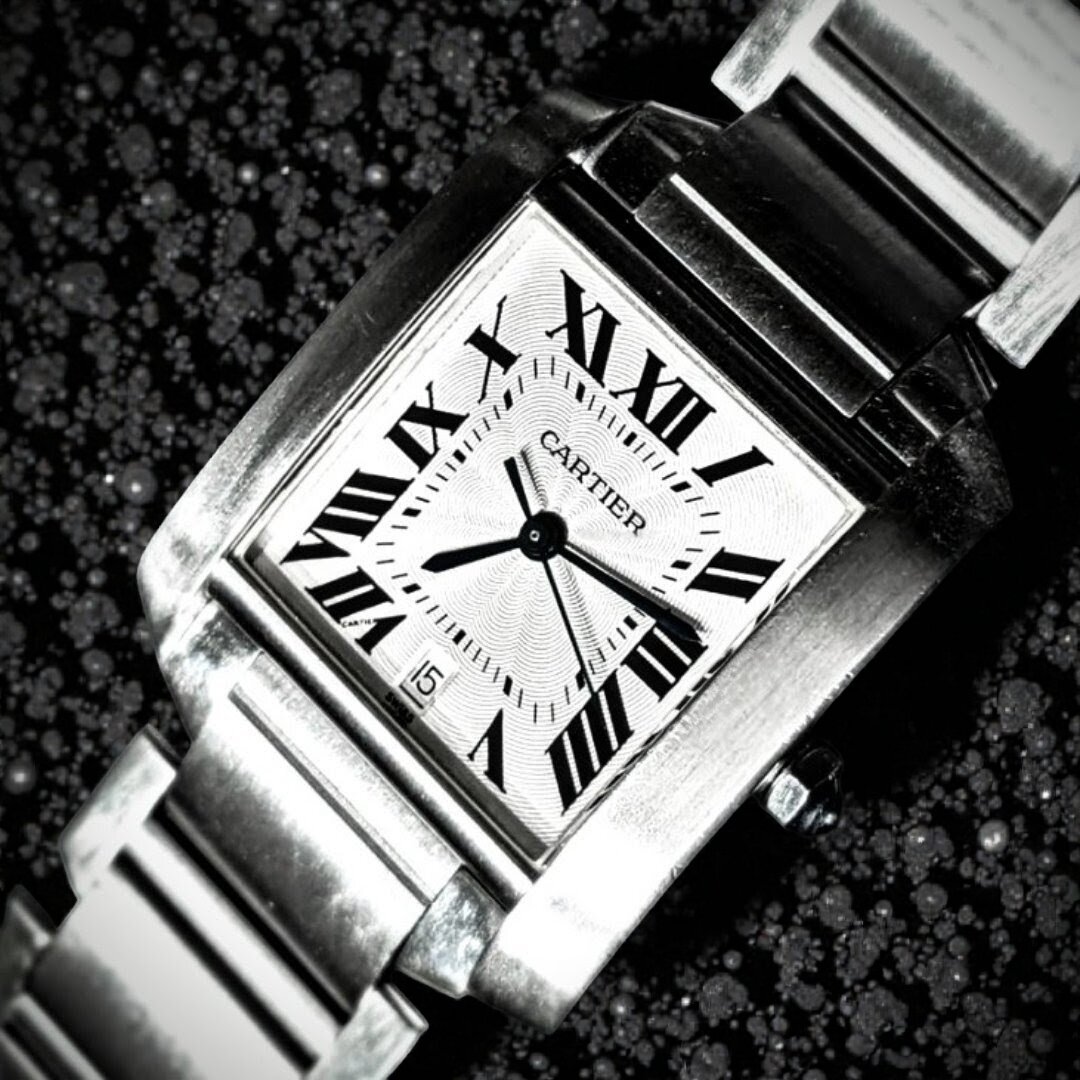
The Ref. 2302 represents the industrial cousin of the family, ditching the delicate leather strap for an integrated suit of armour that feels remarkably substantial. It’s the kind of watch that looks just as home with a t-shirt and jeans as it does with a bespoke suit—a bit of a chameleon for the modern enthusiast.
“Large” by Name, Elegant by Nature
Don’t let the "Large" label fool you. In the world of Cartier, "Large" is a relative term; the 2302 measures roughly 28mm x 32mm, which by today’s standards is the definition of a perfectly proportioned unisex watch. The genius lies in the curvature of the case. It doesn’t just sit on the wrist; it hugs it. The integrated bracelet follows this arc seamlessly, creating a silhouette that feels more like a piece of high-end jewellery than a bulky time-telling tool. It’s a masterclass in ergonomics that many modern brands still struggle to get right.
A Dial That Plays with the Light
Peering through the sapphire crystal, you’re greeted by all the Cartier "hits," but with a bit of extra texture. The silvered dial features a lovely guilloché pattern that radiates from the centre, giving the face a depth that the flatter Solo models lack. You’ve got the bold Roman numerals, the "chemin de fer" minute track, and those iconic blued-steel sword hands. At 6 o'clock, there’s a discreet date window—a practical addition that makes the 2302 a proper daily wearer for anyone who actually needs to know what day of the month it is.
No Faffing Required
Under the bonnet, the 2302 is powered by an automatic movement (the Cartier Calibre 120), typically based on a reliable ETA 2000-1. While some purists might demand in-house calibres for everything, this choice makes the 2302 a fantastically sensible bit of kit. It’s robust, easily serviced by any competent watchmaker, and does away with the morning ritual of manual winding. It’s the "set it and forget it" option for the person who wants Cartier’s heritage without the fuss of vintage mechanical quirks.